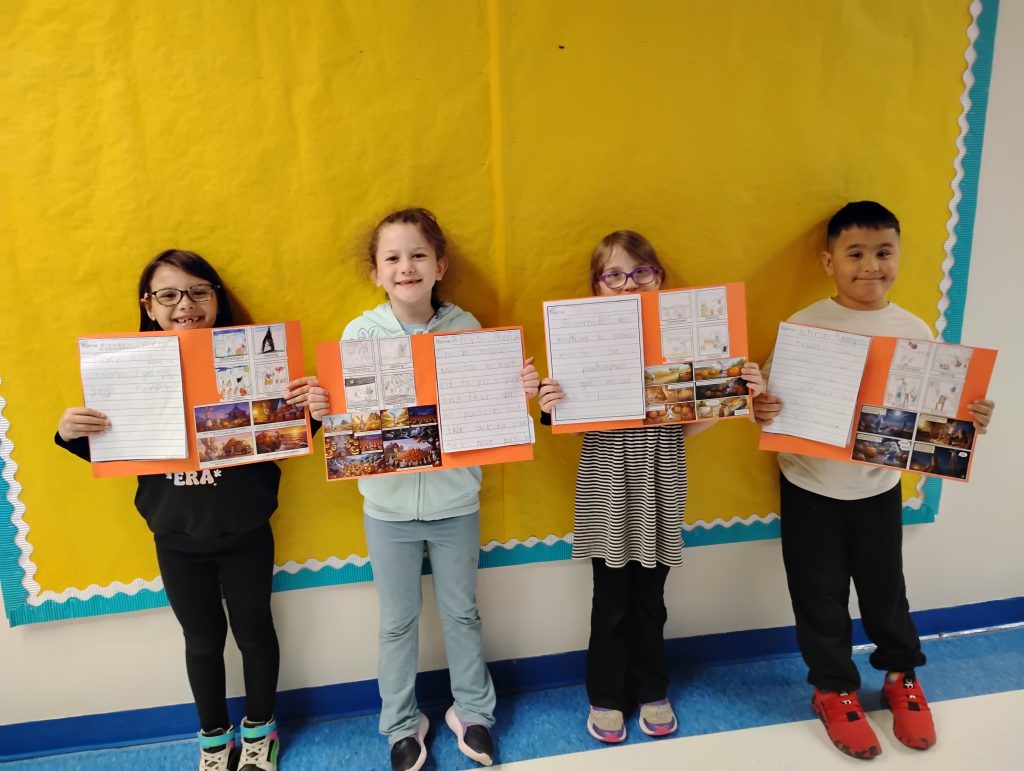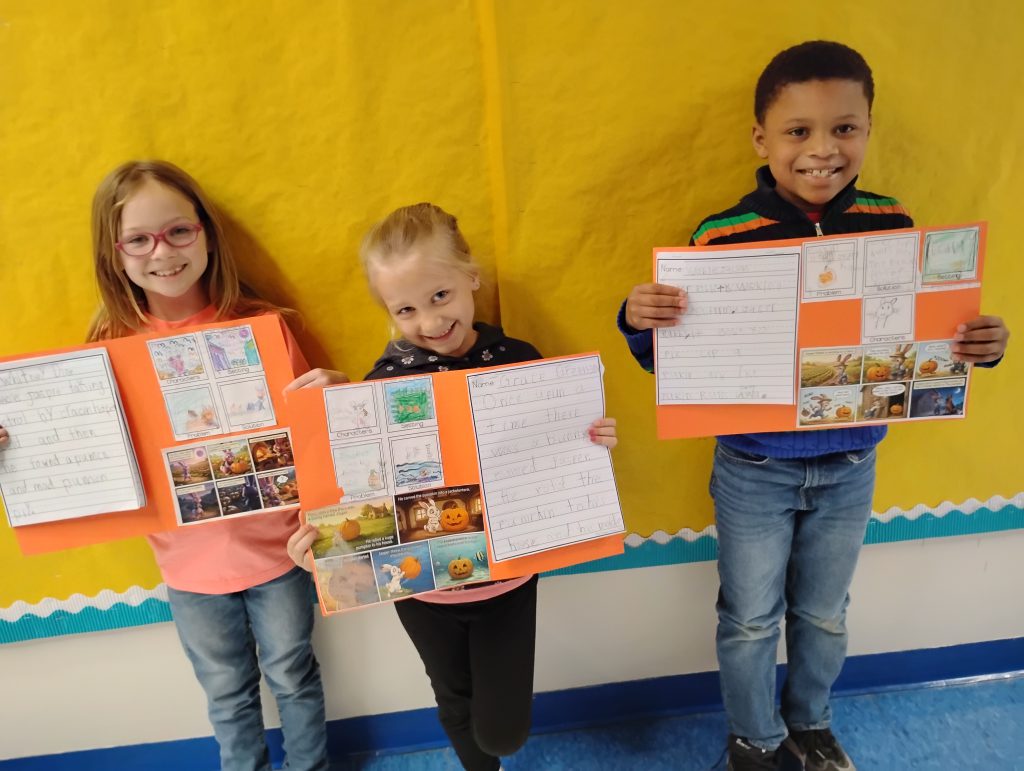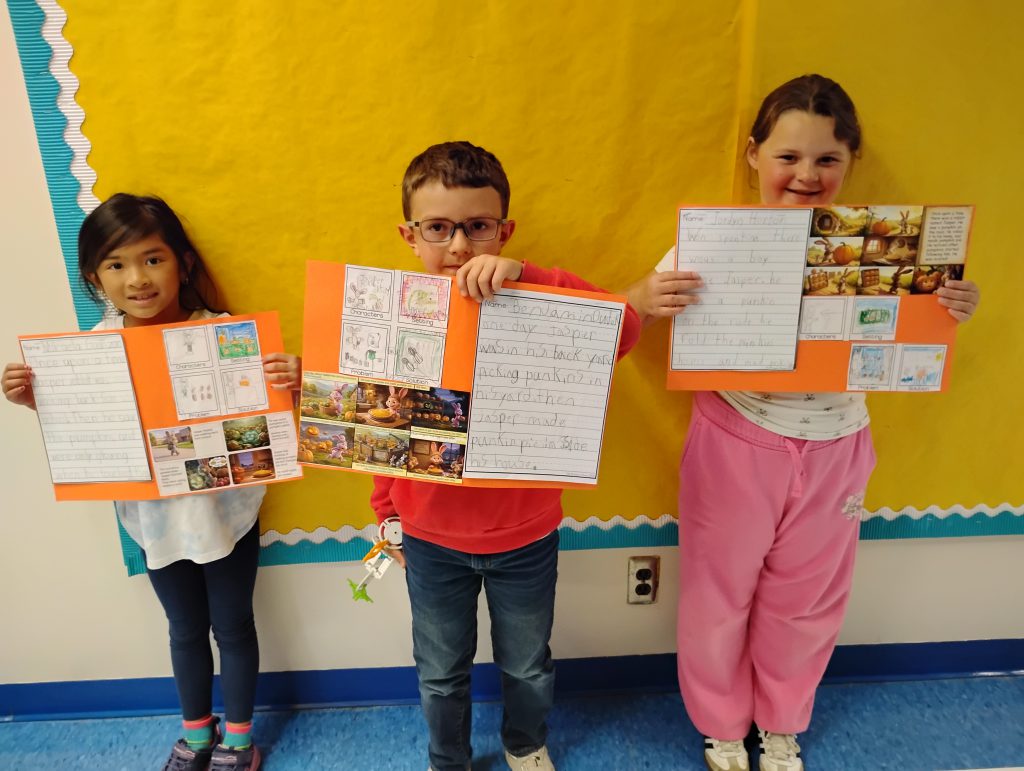
In Ms. Smith and Ms. Shamro’s second-grade classrooms, literacy came to life through a creative and thoughtful project that blended storytelling with thoughtful exposure to artificial intelligence.
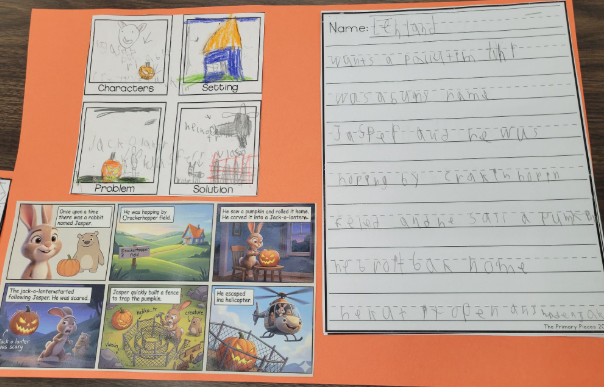
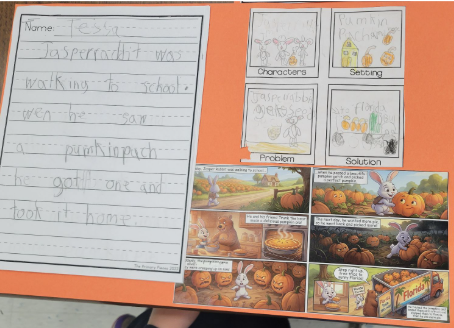
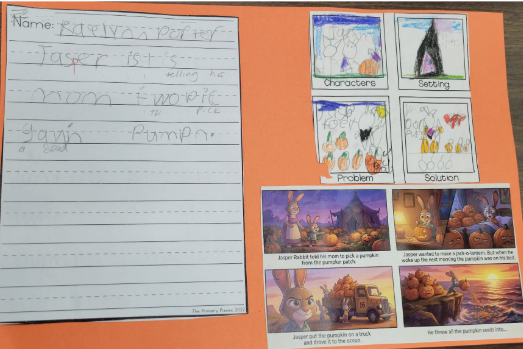
After reading The Creepy Carrots series and following the adventures of Jasper Rabbit, students focused on the essential elements of storytelling—characters, setting, problem, and solution. Using graphic organizers, drawings, and detailed writing, each student created their own multi-page story, bringing their ideas to life through both words and illustrations.
To extend the learning, Ms. Smith and Ms. Shamro partnered with Ms. Patete to introduce a new layer to the project. Using Google Gemini, the teachers input student stories and generated comic strip versions of each narrative. These were then turned into posters, allowing students to visually compare their original work with the AI-generated interpretation.
The impact of the project was immediate and meaningful. Students were excited to see their stories transformed and eager to share their work, proudly presenting both their original writing and the AI-generated comics. As they discussed their projects, they spoke with confidence about their characters, settings, and plot choices, while thoughtfully analyzing the differences they noticed in the AI versions. Many students pointed out specific changes—identifying how characters, settings, and plot details were altered—and explained why those differences mattered, often recognizing shifts in meaning.
This excitement led to rich, guided discussions that deepened their understanding of artificial intelligence. Students began to recognize that AI is a powerful tool that can support their work, but it does not replace their thinking. They understood that while AI can generate images and ideas, it may not fully capture the author’s intent—and that it is their responsibility as writers to review, revise, and determine what is accurate. Through this process, students developed a strong sense of ownership and pride, not only in their writing, but in their ability to thoughtfully evaluate both their own work and the work of AI.
This experience moved beyond simple technology use. It built critical thinking, strengthened understanding of narrative structure, and introduced students to the importance of evaluating digital tools.
At Tri-Valley, this is what meaningful learning looks like—students developing strong foundational skills while learning to think deeply, question thoughtfully, and engage with the tools of the future in responsible and purposeful ways.